

Allana Coulon, our Managing Partner, looks at how ambidextrous organisational theory can help government adapt to the age of AI. This article was first published by Hāpai Public in a slightly different version in the Summer 2025 issue of Public sector magazine.
Fewer than 1% of people are truly ambidextrous. That makes good evolutionary sense – having a dominant hand helps us perform complex tasks more efficiently, developing muscle memory through habitually using one hand and so reducing cognitive load.
But lately, I’ve noticed that our well-formed habits, especially around technology, are under pressure. The sheer number of apps, channels, and tools we use to get work done is growing fast, and our cognitive load is increasing. I feel it personally – for example, the disorienting effect of having so many ways to save and share documents.
What we’re experiencing as individuals is mirrored at the organisational and system level, with AI advancing faster than our traditional public-sector structures can absorb. AI is going to change how we make decisions, how we organise work, and how people experience government. But in directing those elemental changes, public-service leaders don’t have the luxury of operating in a lab: they’re working with shifting political contexts and facing high expectations to deliver, diminishing trust in government from citizens, and tighter budgets.
When you’re a busy leader, turning your mind to the tidal wave of AI-related change is hard. It can feel like an unnecessary distraction but it’s anything but.

Ambidexterity matters for organisations too
Ambidextrous organisational theory offers lessons for managing this turbulence.
The core idea is about balancing two competing needs. On one side is exploration – innovating, experimenting, and risk-taking to maintain long-term relevance. The other side is exploitation – efficiently executing today’s core business.
Overemphasising exploitation risks long-term stagnation and irrelevance. Too much exploration risks wasting resources on endless pilots, without clear prioritising and scaling up of the best new ideas for BAU.
Research shows that organisations that master the exploration–exploitation balance outperform their peers in turbulent environments and adapt faster to shocks.
Building ambidexterity in government
Just as when someone has to work hard to train and use their non-dominant hand, there’s nothing natural or effortless about organisational ambidexterity – it takes conscious practice and effort. This is especially important in the public sector, where the dominant hand is bureaucracy – formal, hierarchical structures, clear divisions of labour, and tightly regulated procedures, in the service of predictability and efficiency. But there are practical ways for public-sector agencies to ensure core services and new ventures can co-exist and thrive.
Organisational ambidexterity can develop in two main ways. One is to make it structural, through establishing separate exploratory units with their own processes, culture, and metrics, alongside teams that deliver core business. The dual structures could be at a group or organisational level.
The other approach is contextual ambidexterity – creating a work context and behavioural capability for moving between exploitation and exploration within the same business unit. It involves “building a set of processes or systems that enable and encourage individuals to make their own judgements about how to divide their time” (Gibson & Birkinshaw, 2004).
Balancing exploration and exploitation in the AI era
There have been earthshattering technological shifts before, but it’s hard to overstate the significance of AI. It’s not just the blistering pace of continuing development, it’s also that AI is so accessible and so ubiquitous, with ChatGPT for example available to anyone with a phone.
Without a deliberate approach to balancing stability and innovation, the unleashing of emergent tools like large language models into government bureaucracies brings special risks.
There’s the danger of disorganised, patchwork innovation in the shadows of your organisation – “shadow innovation” – with under-reporting of failures and little sharing of lessons. The flipside risk is no innovation at all, with exploration stifled through an exclusive focus on BAU.
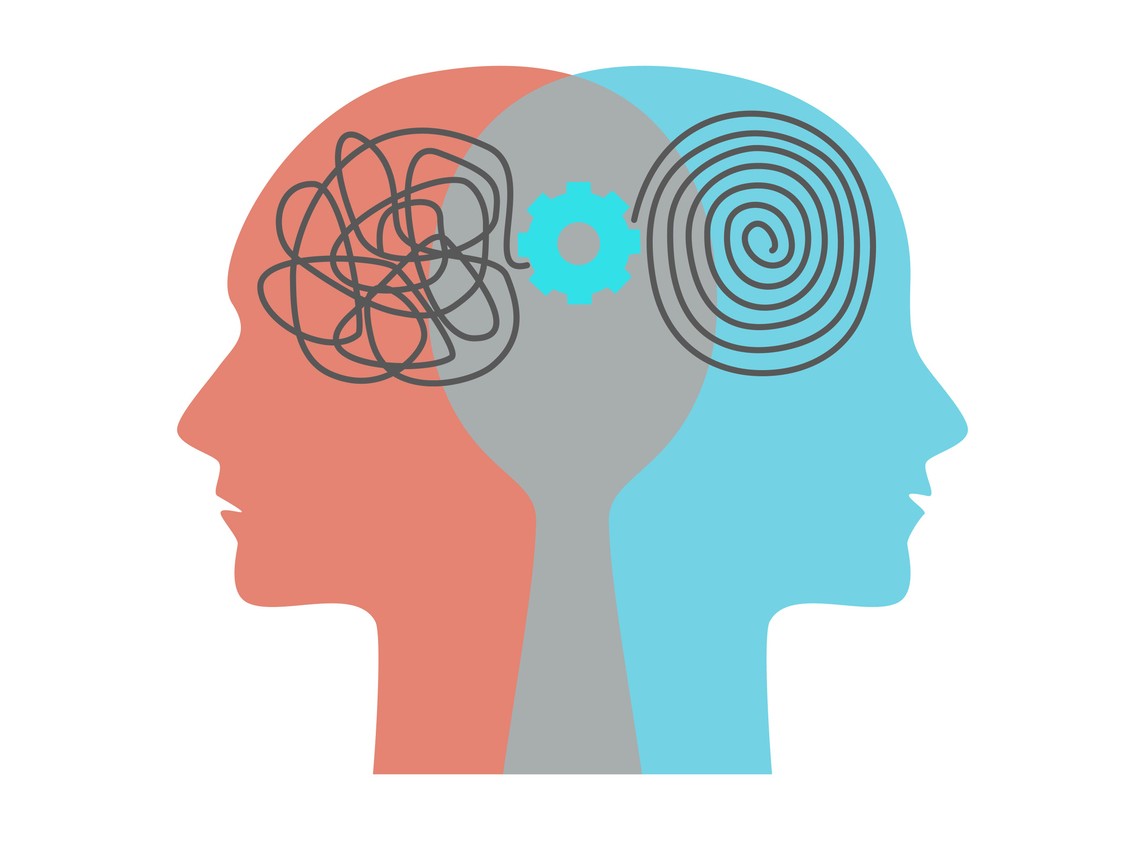
Working up a practical playbook for balancing stability and innovation
We need a practical ambidextrous playbook for organisations in the AI era. Here are some initial thoughts.
However you provide space for experimentation in your organisation – whether through dual structures or through a less direct, more contextual approach – you’ll need to ensure you have clear criteria for triaging and sequencing initiatives. For example, you might prioritise pilots that have high public value, manageable risks, and short learning cycles.
You will also need to then have a clear pathway and criteria for successful pilots to become part of mainstream operations. And while the rules of engagement for exploration will always need to be clear and certain, at the same time you will need to be flexible in allocating resources.
It starts from the top
There’s one certainty here, which is that your organisation’s approach to developing ambidexterity needs to start at the top. This is perhaps the hardest job of all – holding the dual responsibility for both delivering today and designing for tomorrow. As well as managing trade-offs and making choices about structures and capabilities, leaders face the critical task of building the culture and behaviours that will allow the organisation to successfully innovate in the age of AI while continuing to deliver its core BAU.