
.jpg)
Sarah Baddeley, Partner at MartinJenkins, looks at what the current fuel supply disruption means for policy design under pressure and why getting targeted support right will matter as much as the supply itself.
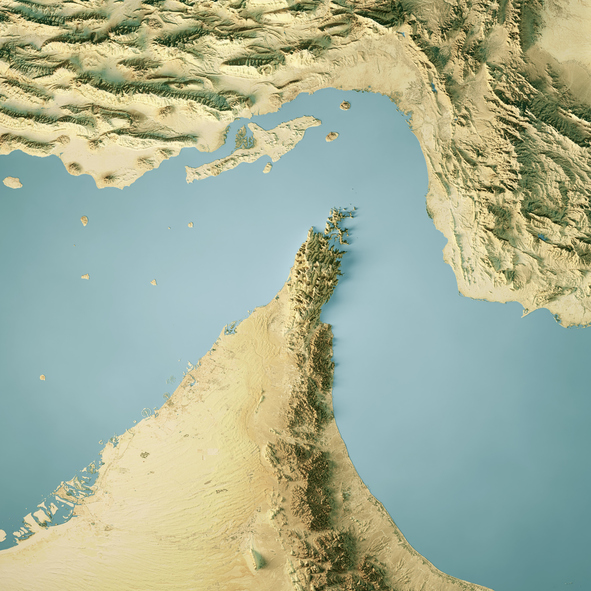
The closure of the Strait of Hormuz has focused attention on fuel stocks and shipping lanes in a way most New Zealanders would not have anticipated a few months ago. As of 18 March 2026, the Government reported around 49 days of combined stock nationally. This is a number that feels reassuring until you realise how quickly the variables underneath it can shift.
Anyone who has tried to design emergency support quickly knows the reality. It is an orchestration of legislative authority, funding availability, administrative system design, tax policy settings, and delivery mechanisms all moving together. They rarely do so cleanly. Get the incentives wrong and you create perverse ones. What looks simple from the outside almost never is.
This article focuses on the design of targeted support for those most affected by a fuel disruption. This is the distributional question of who gets help and how, rather than the separate and equally complex question of how fuel itself might be allocated across sectors and uses if supplies tighten further.

The problem with policy under pressure
One of the most honest observations in Treasury's recent long-term insights briefing, Te Ara Mokopuna 2025, is that decision-making under uncertainty is genuinely difficult. That might seem obvious, but it is worth sitting with. During the COVID-19 pandemic, policy makers erred on the side of doing more rather than less, partly because the initial downside scenarios were so alarming. The subsequent economic recovery was faster than forecast, and the stimulus that had seemed necessary contributed to an extended period of high inflation that we have had to unwind.
The lesson from this last round of policy under pressure is that calibration to the specifics of the shock matters enormously. Calibration is hard when you do not know how things will unfold. It also means that policies and plans need to be quickly revised as new information observed.
A fuel disruption is a different kind of shock. The first-round effects are concentrated, transmitted easily and quickly, and with distributional effects that are far from uniform. The people who will feel it first and hardest are not the same people who can most easily absorb it.
Before any of the distributional questions can be addressed, there will be parallel work occurring to ensure that essential services (such as hospitals, emergency responders, freight and food supply chains) have guaranteed access to fuel and that any allocation framework is designed with that hierarchy in mind. Beyond the obvious emergency services, there are whole sectors where demand for fuel is simply not elastic. This will include farmers who cannot choose when to harvest, fishing boats that cannot choose when to sail, manufacturers whose production lines do not have a pause button.
The focus here is on distributional effects specifically, how policy might be designed to support the households and businesses that bear the heaviest burden of a fuel disruption, and why getting that design right is harder than it looks.
Right now, the policy design focus will likely be on low-income households, people in rural communities with no public transport alternatives, and small businesses with high degrees of exposure including those running thin margins on freight and logistics.
Getting the policy response right means thinking carefully about who is affected, by how much, and what kind of support would genuinely help them.

Timely, temporary, targeted is easier said than done
Treasury's framework for fiscal responses to shocks is elegant in theory: support should be timely, temporary, and targeted. In practice, each of those three words hides a thicket of practical, policy design difficulties.
Timely is the one that often shows a real design tension. Administrative systems are not built for speed. The 2022 Cost of Living Payment showed that Inland Revenue has developed real capability, but it also showed the limits. Payments reached people who were overseas or deceased. The systems exist, but they are not perfectly calibrated for precise, rapid deployment. If a fuel crisis deepens quickly, the machinery of government will be working against the clock.
Temporary sounds straightforward but rarely is. Once support is in place, withdrawing it is politically difficult even when the case for doing so is clear. Time-limited payments can also create equity concerns. For example, people who were already receiving benefits before the crisis may find that an emergency payment is more generous than their baseline support. This will raise questions about fairness that are not easily resolved. One of the harder political and social realities of a prolonged disruption is that at some point the price increase stops being a temporary shock and starts being the new normal. Helping people adjust to that reality is a very different policy challenge from cushioning them against its immediate blows.
Targeted is arguably the hardest of the three. A fuel disruption does not affect everyone in the same way or in the same place. Regional targeting is notoriously difficult. Treasury notes from its review of the Christchurch wage subsidy experience that agencies often lack precise location data, relying on information that may come from accountants or agents based somewhere else entirely. A business registered in Auckland but operating trucks out of Northland is a harder case to catch than it sounds.
There is also the fundamental challenge of distinguishing between households and businesses that need short-term support through a genuine disruption, and those that are using the disruption as cover for pre-existing difficulties. That distinction is easy to state and hard to operationalise quickly.
What kinds of tools are available?
Policy makers have a range of options, and the choice between them matters.
Lump-sum payments to individuals have a reasonable evidence base behind them. Treasury cites research (drawn largely from the United States) identifying that lump-sum payments generate positive multiplier effects. This work suggests the consumption response to such payments ranges from 30% to 60% per dollar, with smaller payments more likely to be spent (noting that the payment needs to be sufficiently significant to be effective). For a concentrated, time-limited shock, a one-off payment through the benefit system or tax system is one of the more deployable tools available. The Ministry of Social Development can reach its existing client base relatively quickly. Inland Revenue is better placed for broader-based payments.
Scaling existing benefits such as Jobseeker, Working for Families, or the Winter Energy Payment are other options. These have the advantage of flowing through established channels. The risk, as with any benefit increase, is that temporary changes become sticky. Expectations are set and reversing them is harder than it looks from the outside.
On the business side, liquidity measures and credit guarantee schemes have precedent from the pandemic response. They can be deployed reasonably quickly and provide breathing room for viable businesses facing a short-term revenue hit. The key word is "viable." Again, Treasury is candid about the difficulty of distinguishing between businesses that are genuinely struggling because of the shock, and businesses that were already in trouble before it. Poor targeting here does not just waste money, it can actively slow the recovery by keeping resources tied up in places they should not be.
A wage subsidy is a more targeted tool for situations where the employment relationship itself is at risk. But a fuel disruption is not obviously a situation where mass job losses loom in the near term. The tool needs to fit the problem.
The information gap
One of the deeper challenges sitting behind all of this is that no one knows how long the closure of the Strait of Hormuz will last. The geopolitical situation remains fluid, and the range of plausible outcomes is wide enough to make policy design genuinely difficult. That uncertainty matters enormously for the kind of support that makes sense. A short, sharp shock calls for different tools than a sustained disruption that begins to reshape supply chains, business models, and household behaviour over time. Designing for one when you get the other is not just inefficient, it can actively make things worse, either by withdrawing support too early or by embedding responses that are hard to unwind once the immediate pressure has passed. The honest answer is that policy makers are currently working with massively incomplete information about a highly uncertain situation that is being shaped by forces well outside New Zealand's control or foresight.
One of the themes running through Treasury's analysis is that better data would help. Real-time economic information, more timely GDP releases, more frequent labour market data. These things matter because they help policy makers know what is actually happening rather than relying on forecasts that may already be out of date by the time they inform decisions.
The Government is currently grappling with all of this. The decision to require MBIE to report on the pipeline of incoming fuel shipments is a good example of exactly this kind of real-time monitoring. This also complements MBIE’s long standing monitoring of importer margins and price components.
That same logic applies to the distributional picture. Which households and businesses are most exposed to a fuel price shock? Where are they? What proportion of their income goes on transport? Which small businesses or industries have the thinnest margins and the least flexibility? The answers to these questions exist in fragmented form across various agencies. Pulling them together before a crisis deepens, rather than during it, is the kind of preparatory work that pays off when it matters.
Planning before the pressure builds
It is worth acknowledging that Treasury has been thinking carefully about these questions. The Treasury’s Te Ara Mokopuna 2025 briefing released last year represented a serious attempt to work through the mechanics of fiscal response before a crisis demands it. That kind of analytical groundwork matters, even if the gap between a well-reasoned framework and a workable policy response in the heat of a real disruption can be considerable. The hard work of translating principles into systems, legislation, and delivery mechanisms still lies ahead.
Right now, across Wellington, officials will be working through the practical flow on of these policy choices including thinking carefully about eligibility criteria for any targeted payments before they need to be announced. It means checking that the IT systems can execute what the policy intends. It means having a clear view of exit conditions including, critically, under what circumstances does support end, and how is that communicated? Key to this will be what price of oil is acceptable as a “new normal” rather than something that would trigger intervention.
The hardest part of policy under uncertainty is not knowing what to do in principle. It is building the systems and making the decisions that allow good principles to be put into practice quickly, fairly, and in a way that reaches the people who need it.
This article reflects the author's independent analysis of publicly available material. This article should not be read as representing the views of any client of MartinJenkins.